electronic potting –
reliable protection through precise dosing technology
Electronic components are at the heart of modern machines, vehicles and devices – and at the same time highly sensitive to moisture, dust, vibrations and temperature fluctuations. Electronics encapsulation is a tried-and-tested method of permanently and reliably protecting circuit boards, control units, sensors and other electronic components.
dosmatix develops and supplies precise dispensing technology for electronics potting – for 1K and 2K potting compounds, atmospheric or under vacuum, scalable for small and large quantities. We supply individual systems that can be optimally adapted to your potting process as compact, modular and flexible systems.
what is electronic potting?
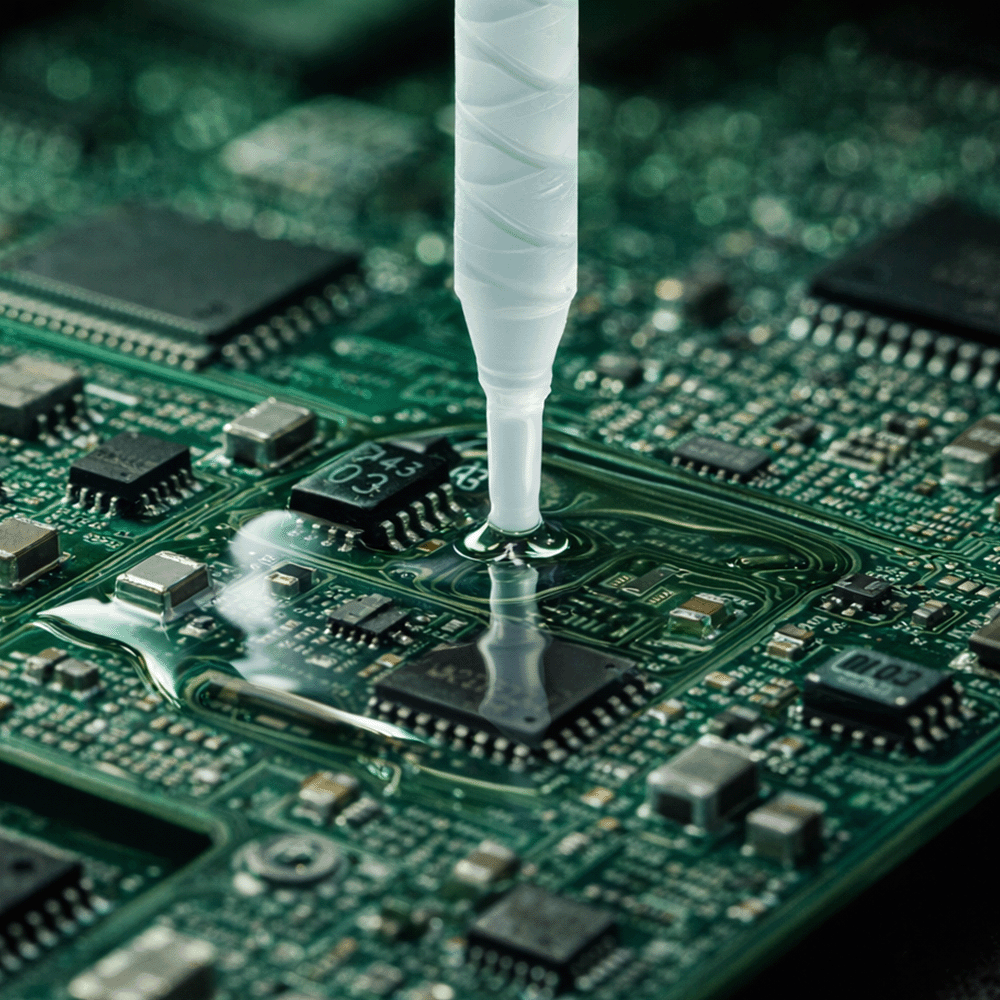
In electronic potting, electronic assemblies are completely or partially encapsulated with a potting compound. The hardened material protects the electronics mechanically and creates a barrier against external influences.
Depending on the requirements, different materials and processes are used. Choosing the right potting compound for electronics – and the right dispensing system – is crucial for the quality, reproducibility and efficiency of the entire process.
Typical protective functions due to electronic encapsulation:
▸ Protection against moisture and corrosion
▸ Vibration and shock damping
▸ Thermal management through thermally conductive potting compounds
▸ Protection against chemical influences and UV radiation
▸ Electrical insulation and leakage current path suppression
potting compounds for electronics –
materials at a glance
The choice of potting compound depends on the mechanical, thermal and chemical requirements. dosmatix supports you in the selection of materials and processes all common potting systems:

Epoxy resin
Epoxy-based potting compounds impress with their high strength, chemical resistance and good thermal conductivity. They are ideal for applications with high mechanical loads or aggressive environmental conditions – for example in automotive electronics or in mechanical and plant engineering.
Polyurethane (PU)
Polyurethane potting compounds are flexible and elastic, which makes them particularly suitable for applications with vibrations or temperature fluctuations. Thanks to their flexible material properties, they can often reduce mechanical and thermal stresses on sensitive components better than epoxy systems. They are therefore frequently used in power electronics and lighting technology.
Silicones
Silicone-based potting compounds offer excellent temperature resistance (from -60 °C to over +200 °C) and remain permanently elastic. They are particularly suitable for high-temperature applications and for sensitive components that require low-stress and gentle embedding.
potting process – atmospheric or under vacuum?
Atmospheric potting
In atmospheric potting, the potting compound is introduced into the component at ambient pressure without a vacuum. This process is suitable for simple geometries and applications. It is comparatively easy to implement and particularly attractive for economical series applications.
Vacuum potting
When potting under vacuum, the air is evacuated from the component before filling. The result: bubble-free, homogeneous potting, even with complex cavities, narrow gaps and high demands on tightness and electrical insulation. This process is standard in high-voltage electronics, power electronics and medical technology.
Unsure which process is the right one? dosmatix advises you in the user technical center – with potting tests under real conditions, directly on your component.
dosmatix dosing systems for electronic potting
dosmatix dispensing systems for electronic potting have a modular design – from the dispenser to the material supply to the kinematics. All components can be combined according to the modular principle.
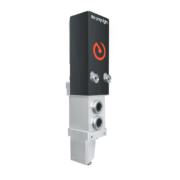
dispenser
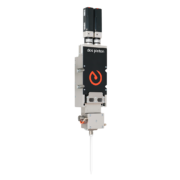
dos piston
Piston dispenser
Dispensing of 1K and 2K potting compounds with high repeat accuracy – for abrasive and non-abrasive materials, dispensing volumes from 0.1 to 106 ml. Optional alternating piston dispensers enable continuous, uninterrupted material application.
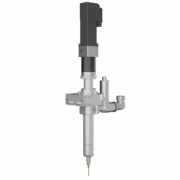
dos screw
Eccentric screw feeder
For abrasive, highly viscous or filler-containing potting compounds. Spot dosing from 0.3 µl and continuous bead application up to 600 ml/min.
>> to the product – Progressive cavity diepenser dos screw
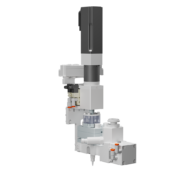
dos gear
Gear metering unit
Volumetric dispensing system for unfilled, non-abrasive, high-viscosity potting compounds. Continuous, precise dispensing with high repeat accuracy.
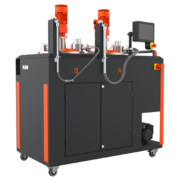
material preparation and supply
dos prep
Material preparation and conveying
Degasses, tempers and homogenizes potting compounds before the dispensing process. For abrasive and non-abrasive materials up to 70,000 mPa-s – in 1K and 2K versions, with 20 or 60 liter tank.
dos prep light
Material preparation and conveying
The lean solution for smaller quantities of material (0.5 or 3 liters). For abrasive and non-abrasive materials up to 70,000 mPa-s – ideal for laboratories, small series and dosing tests.
kinematik
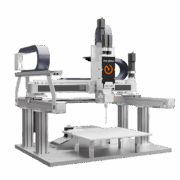
dos in-line
Integration module for production lines
Axis system with dosing movement in 3 degrees of freedom. Can be integrated into existing production lines.
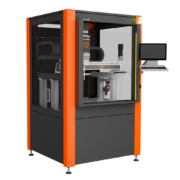
dos cell
Stand-alone dosing cell
Fully automated dosing cell with protective cell and axis system in 3 degrees of freedom. Ideal for series production as a stand-alone system.
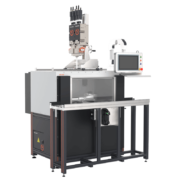
dos vac
Vacuum chamber for bubble-free potting
Vacuum chamber with integrated 3-axis system for potting under vacuum. For the highest demands on tightness, electrical insulation and freedom from bubbles.
You can find a complete overview of all dosmatix products on the product page.
why dosmatix?
dosmatix is more than just a system manufacturer – we are your system partner for the entire potting process:
- Application technology center: Potting tests with your material and your component before making an investment decision
- Material independence: dosmatix systems process potting compounds from all well-known manufacturers
- Scalability: Can be flexibly adapted to material, process and quantity thanks to modular dosing systems
- Precision and repeat accuracy: Exact volume and movement control for consistent dosing results
- Service and support: commissioning, training, maintenance and process optimization from a single source
- Certified: Certified quality management system according to ISO 9001
frequently asked questions and answers

What is the difference between electronics potting and electronics sealing?
A: With electronic potting, the electronics are completely embedded in a potting compound – the housing is filled completely or to a defined level. With conformal coating, on the other hand, only a thin protective layer is applied to the surface of the PCB. Potting usually offers a significantly higher degree of protection.
Which protection classes are achieved by encapsulating electronics?
A: With suitable potting compound and correct processing, protection classes up to IP67 (dust-tight, temporarily watertight) and IP68 (permanently watertight) can be achieved. The exact protection class depends on the housing design, the potting material and the potting quality.
When is vacuum potting necessary?
A: Vacuum potting is recommended when bubble-free results are required – for example, when high demands are placed on electrical insulation, tightness or thermal conductivity. Typical applications: High-voltage electronics, power modules, medical technology.
What is the difference between 1K and 2K potting compounds?
A: 1K potting compounds consist of a single component and cure through heat, UV light or moisture. 2K systems consist of resin and hardener, which are mixed just before processing. 2K systems offer more flexibility in terms of material and process properties and are standard for most industrial electronics potting applications.
What viscosities can dosmatix systems process?
A: dosmatix dispensing systems cover a wide range of viscosities – from low-viscosity potting compounds (< 100 mPa-s) to highly viscous, pasty systems (> 1,000,000 mPa-s). The selection of the appropriate dispensing module (piston, progressive cavity) depends on the type of material.
Can I test my material in advance at dosmatix?
A: Yes. In the dosmatix user technology center, we carry out potting tests with your material and your component – under real process conditions. This gives you reliable information on dispensing capability, process parameters and the right type of system before you invest.
Can dosmatix systems be integrated into production lines?
A: Yes, dosmatix dosing systems can be easily integrated into automated production environments thanks to the Beckhoff PLC (TwinCAT) and support for common interfaces such as EtherCAT and OPC UA – including connection to robot systems, portals or transfer systems.
contact us
your direct contact
sales(at)dosmatix.com
Phone: +49 8783 9667 530